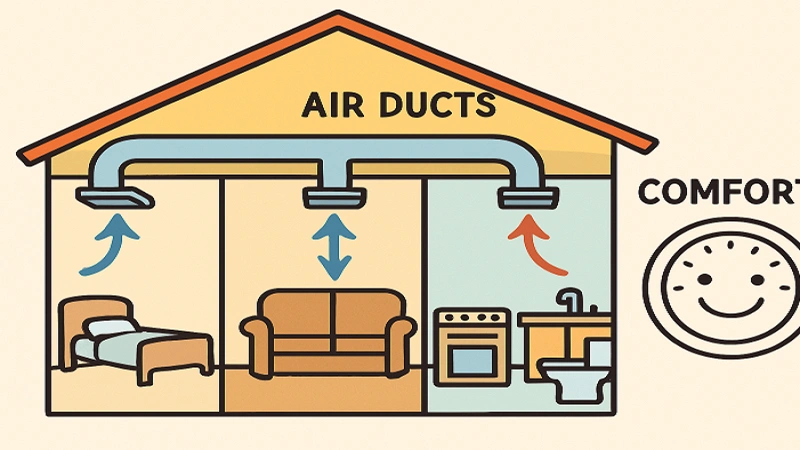
To maximize comfort and benefit in saving utility costs, a modern central duct HVAC system is a common standard in the industry among homeowners wishing to invest in this system. The systems are highly skilled in dispensing conditioned air to living rooms, which is also related to controlled temperature and effective energy consumption. Combining innovations such as smart thermostats or ducted heat pump system is an additional enhancement to the performance, offering customized solutions to the broad range of climates.
The main outstanding feature of central ducted HVAC systems is their capability to maintain a stable indoor environment irrespective of the changes in the weather outside. These systems not only help in ensuring a consistent climate in each room, but also help in ensuring low energy consumption, thus residents of homes realize cost savings, and the culture of environmentally responsible living is practiced. This efficiency is ensured by careful installation, regular upkeep, and state-of-the-art technologies.
These characteristics work together, and they help to achieve a comfortable and effective interior environment. Different advances in the design of ducts, the use of long-lasting materials, and energy-saving controls can help reduce monthly payments and increase the life of the systems. The U.S Department of Energy has revealed that properly maintained HVAC systems positively influence home energy conservation and comfort to a large degree.
Moreover, rebates available in various utility companies and government programs are also worthy, and hence investing in an efficient central system would become even cheaper. The ability to keep up with the existing financial incentives and utility affiliations can bring in some new savings opportunities. To get more information, one can use reliable sources such as Consumer Reports that give in-depth details and suggestions regarding what kind of HVAC system to use in your house.
Consistent Temperature Control
Central ducted HVAC systems are constructed in a manner that evenly distributes the level of temperature to each and every room of the house. These solutions offer the benefit of avoiding hot and cold areas, which are centralized, unlike space heaters or window units. Having defined vents, deeply aimed, and enhanced airflow designs, rooms can achieve target temperatures faster, and they can retain the temperature during the day and night. This dependability is vital in environments that may undergo massive shifts in weather conditions outside, hence the indoor environment will be comfortable to all occupants all the time.
Proper Installation is a Way to Save Energy
A central ducted HVAC system has the potential to save energy; however, a well-known solution is that proper installation is required. The ductwork should be specially sealed and insulated to prevent loss of air through ducts, which may happen in the attic, crawl spaces, or on walls. Research conducted by the U.S Department of Energy states that as much as 30 percent of the energy expended in cooling or heating can go to waste, through grossly inadequately sealed ducts. Engaging certified HVAC professionals to work with homeowners can optimize the efficiency of their systems and reduce their utility bills by knowing what best practice involves with regard to their installation and configuration.
Significance of Routine Servicing
A central ducted HVAC system is critical to ensure smooth working of the system and also increases the longevity of components. Regular checks, replacement of filters, and cleaning of coils, blowers, and ducts by professionals will maintain the performance of the system and indoor air quality. Failure to perform regular maintenance can enable the build-up of dust and debris, which will cause a decrease in the flow of air, and cause the system to strain more than is needed. It is important to have regular service calls at the beginning of every heating and cooling season to ensure the best outcome and reduced chances of unscheduled breakdowns.
Modern Technologies and Improvement of Performance
Smart Thermostats and Variable-Speed Motors
These new systems provide a great deal of improvement in efficiency and control. Smart thermostats have automatic scheduling, learning functions, and mobile app functionality, which enable users to carefully adjust their heating and cooling routines based on their occupancy and living habits. Variable-speed motors also control the speed of fans based on the exact requirements of comfort to save on unnecessary power wastage in times of low demand. These properties have the capability of saving significant amounts of power and hence, they may save a lot of money annually.
Targeted Comfort Zoning Systems
Zoning technology allows the homeowner to program independent thermostats and dampers to provide customization of the temperatures in the house in different parts of the house. Zoning contributes to energy conservation rather than comfort by targeting the areas that are occupied, or heated or cooled, and minimizes the creation of energy in the rooms that are not in use. This can be particularly useful in larger homes or in multi-story houses, where conventional one-zone systems can be quite ineffective at keeping all the conditions consistent. In the long run, zoning may result in significant energy conservation and comfort to individuals.
Financial Rewards and Importations
A significant financial gain that goes beyond savings on energy is achievable through an upgrade of the current high-efficiency HVAC systems. Various homeowners will be able to benefit from federal tax credits, state rebates, and special deals offered by local utility firms that will offset the initial expenses of the modern equipment. Sites such as Energy Star have resources, such as a rebate finder, that allow users to search their area to find an available incentive. With these financial opportunities, the homeowners are able to make their heating and cooling systems energy efficient and make them more affordable to reduce long-term utility bills, and also make the house more comfortable, have less environmental impact, and add to the overall value of their home.
Proposals for the Environmental Impact of Efficient HVAC Systems
High-efficiency central ducted HVAC systems reduce carbon emissions by using less electricity and fuel, which reduces the amount of carbon produced by households. The Environmental Protection Agency reports that the U.S. has a considerable amount of greenhouse gas emission that comes as a result of residential energy consumption. Switching to a more efficient system not only positively affects individual spending but also plays a significant role in the work of the community to address climate change and protect the environmental resources to be available to future generations.
Conclusion
Available in central ducted form, the central ducted HVAC system is a highly efficient and reliable way of upholding optimum home comfort all year round. When installed correctly and well-maintained, such systems will guarantee stable temperatures, better air quality, and less waste of energy. By embodying the latest technologies, including smart thermostats, variable speed fans, and zoning controls, homeowners can customize climate settings in particular zones to improve their comfort, as well as minimize utility, thus offering a better experience and reducing their expenses on utilities. On top of that, rebates, tax breaks, or utility subsidies may balance initial costs, and such upgrades are more cost-effective. In general, central ducted HVAC systems with their efficiency, convenience, and sustainability provide a breed of efficiency, convenience, and greenness in the home setting, making it a more innovative and friendly environment. See more